


How patients choose a doctor before the first visit
A friend’s word, a search, a look at your details. What happens before a patient ever calls your chamber.

For doctors
12 short guides for doctors in Bangladesh. You will learn how patients search for a doctor, compare and choose one, and the simple steps that help them find you. Start with the two-minute checkup below; it shows which guide to read first.
Seven yes-or-no questions. Your answers stay on this page.
0 of 7 in place
Answer the questions. You will see what to fix first, and the guide that shows how.
Want our team to do this for you?
12 short guides on one path. Read them in order, or jump to a step.
Start here
How patients choose a doctor today, and what the BMDC code lets you show. Read these two first.
A friend’s word, a search, a look at your details. What happens before a patient ever calls your chamber.

What the code of conduct allows a doctor to share, and what it asks you never to say. In plain words.
Step 1
Patients can find you on Google, on ChatGPT and on your own website.
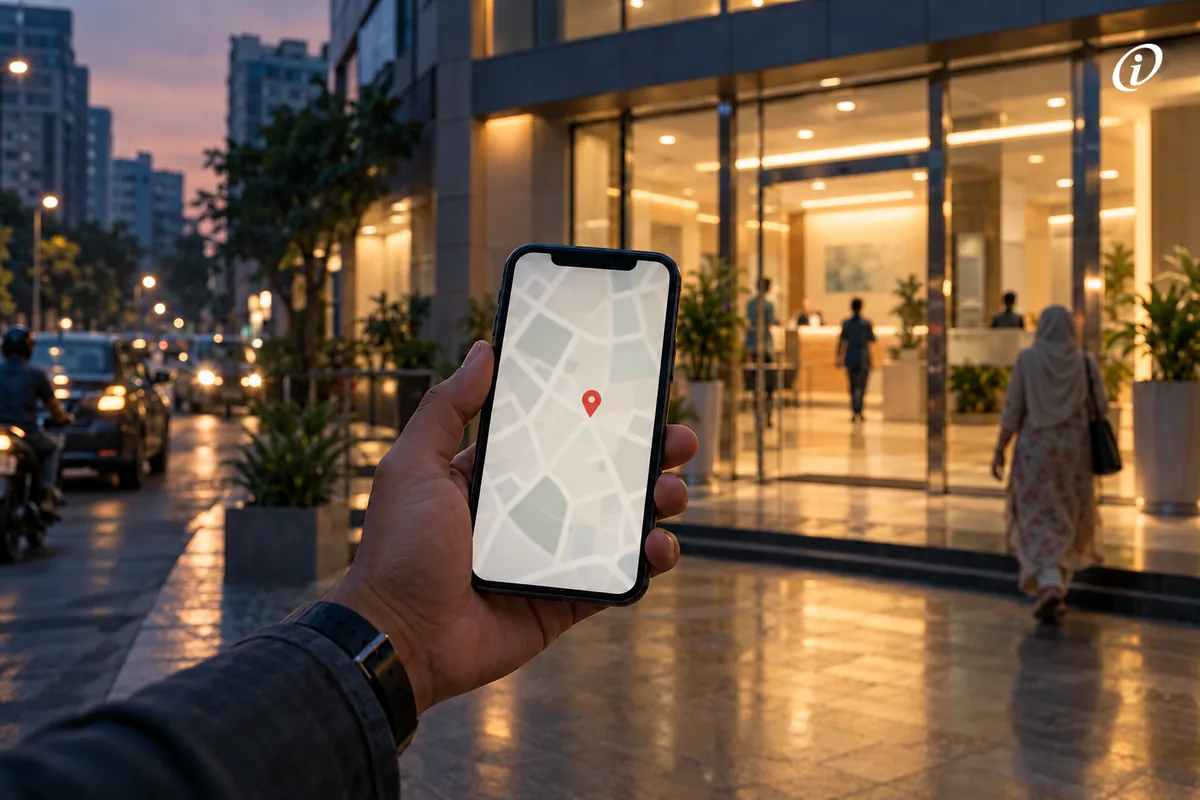
The free Google listing that shows your name, map, hours and phone when patients search. How to set it up right.

Who you are, where you sit, how to book. What a patient looks for before they call, and what to leave out.

Some patients now ask ChatGPT, or read Google’s AI answers. Where those answers come from, and what you can do.
Step 2
What patients see and read about you makes them feel safe to call.

The few things a patient tells a friend about you. How to choose them, and say them the same way everywhere.

How to answer a kind review and an unhappy one, without sharing anything private.

Posts that explain a condition clearly help patients and earn their trust. How to write them within the BMDC code.
Step 3
Reaching you is easy, and every detail they find is right.

So patients can book a serial at any hour, without crowding your personal phone. Plan it in one evening.

A wrong time or an old address costs a patient a wasted trip, and costs you their trust. Fix it in an afternoon.
Step 4
They come back when they should, and you know what is working.

A missed follow-up is missed care. How a short message at the right time helps patients come back when they should.

One question at the first visit and a simple monthly count show what is working, and what is wasting your money.
Everything in these guides is work our team does for doctors, inside the BMDC code. Book a call and we will show you what a patient finds when they look you up today, and what we would fix first.
In short
Most new patients hear your name from someone they trust, then check it on a phone before they call. If what they find is clear and correct, they call. If it is missing, old or confusing, they may call the next name instead.
A patient cannot judge your medicine before meeting you. So they judge what they can see:
None of these is about your skill as a doctor. Each one is easy to fix, and the guides on this page show how.
Your checklist
In short
The BMDC Code of Professional Conduct lets you share facts about your practice: who you are, your qualifications, where and when you see patients, and how to reach you. It does not allow claims to be the best, promises of a cure, or publishing thank-you letters from patients. The code says it also applies to how doctors use social media.
The code calls any publicity for a doctor’s services “practice promotion”, and says it includes any means by which a doctor or a practice is publicized, in Bangladesh or elsewhere (section 3.3). Section 1.2 says the code also applies to how doctors use social media. So your Facebook page, your website and your Google listing all count.
Section 3.1 says information a doctor gives the public must be accurate, factual, objectively verifiable and balanced. Section 3.2 says it must not:
Section 3.4 sets out the ways a doctor may share service information with the public, among them signboards, stationery, doctors’ directories and a practice website (3.4.5). The details allowed are plain facts, such as your name, your qualifications, your specialty, where and when you see patients, and how to contact you. Section 3.4.6 also allows a notice of your fees outside your chamber. Check the exact list in the code before you add anything else.
The code supports health education. Section 3.6 asks that it is never used to promote your practice or to canvass for patients, and that it does not give the impression the audience should come to you for treatment. The guide on health posts shows how to do this well.
Your checklist
This guide explains the BMDC Code of Professional Conduct in plain words. It is not legal advice. When you are unsure, read the code on the BMDC website or ask BMDC.
In short
When someone searches for you, or for a doctor nearby, Google shows a box with a name, a map pin, hours, a phone number and reviews. That box is a Google Business Profile. It is free, it is made by Google, and you can set it up in an evening.
A Google Business Profile is your listing on Google Search and Google Maps. Patients use it to find your chamber, check your hours, call you and read reviews. Google can show a listing for a place even when nobody has claimed it, so an old or wrong one may already be there.
Each address where patients see you can appear on Google. Google has its own rules for doctors who share a chamber or a hospital with other doctors, in its guidelines for representing a business on Google. Read them before you add a second listing, or ask us.
Your checklist
In short
A patient who opens your website wants three answers quickly: who you are, where and when you see patients, and how to book. Put those on the first screen, make sure it works well on a phone, and keep everything else simple.
Directory sites list you beside many other doctors, often with old details you cannot change. Your own website is the one place where every detail is yours to keep correct. It is also a page Google and ChatGPT can point to when they describe you.
Your checklist
In short
Tools like ChatGPT and Google’s AI answers write their replies from what is published on the web. If your details are correct and the same everywhere, they are more likely to describe you correctly. Nobody can promise that they will name you.
When a patient asks “Which dermatologist in Uttara sees patients on Friday?”, the tool searches the web and writes a short answer. ChatGPT and Google often show the pages they used as links under the answer. So what they say about you comes from your website, your Google listing, directories, news and posts that mention you.
No one can guarantee first place on Google or a mention by ChatGPT. What a good team can do is make your details complete, correct and easy for these tools to read.
Your checklist
In short
Your personal brand is what patients remember and repeat about you: your name, what you treat, how you treat people, and how you look and sound everywhere they find you. Every doctor already has one. You can choose yours on purpose, write it down, and keep it the same everywhere.
When a patient recommends you, they say a few short things: your name, what you treat, where you sit, and what you were like. “The child specialist in Mirpur. So patient with children.” That sentence is your brand. Branding means choosing that sentence on purpose, then making everything a patient sees say the same thing.
Put it together as one plain line of facts, for example: “Child specialist in Mirpur. Evening chamber, six days a week. Clear advice for parents.” Use it on your website, Google listing and Facebook page. Keep it factual: the BMDC code does not allow claims to be better than other doctors (3.2).
Your checklist
In short
Patients write reviews on your Google listing, and other patients read them. Answer briefly and politely, never mention a patient’s health, and never buy, write or swap reviews.
One or two lines are enough: “Thank you for taking the time to write. We wish you good health.” Do not repeat the illness or the treatment, even if the patient mentioned it. Your reply is public.
If a review is fake, abusive or about someone else, you can report it from your Google Business Profile. Google decides whether to remove it.
Your checklist
In short
The BMDC code welcomes health education, as long as it is not used to promote your practice. Explain one common question per post, in plain words, and leave out any “come to my chamber” line.
Section 3.6 says a doctor must not use health education to promote a practice or to canvass for patients, and that the material must not give the impression the audience should come to that doctor for treatment. It must not promote medical products either.
One good post a week is better than five rushed ones. A list of twelve topics is three months planned.
Your checklist
In short
A patient management system is one place where every booking lands, whether it comes from your website, Google, Facebook or a phone call. It confirms the serial, reminds the patient before the visit and the follow-up, and keeps your personal phone out of it.
In most chambers, bookings arrive as calls, messages and notes in a register, and someone has to keep them in order. A patient management system puts them in one list. The patient picks a chamber, a day and a time, gets a confirmation with the serial, and a reminder before the visit. Your staff see the whole day on one screen. It works with the ways your patients already reach you, and more can be added later.
Your checklist
In short
Write your chamber details once, in one way, and use exactly that everywhere: Google, your website, your booking page, Facebook, directories and the chamber phone. When anything changes, update all of them the same day.
Keep one note with the exact wording of:
Copy from this note every time. Never retype from memory.
Addresses in Dhaka can be hard to find. Add a landmark the patient will recognise, the floor, the room number, and where to park. Put the Google Maps pin on the entrance itself.
Your checklist
In short
A short reminder a day before the follow-up helps patients come back on time. Ask permission first, keep it to two lines, and never put the illness in the message.
In Bangla or English, as the patient prefers. For example:
“Reminder: your follow-up with Dr. [Name] is tomorrow, Sunday, at 6 pm at [Chamber], [Area]. Please bring your previous reports. To change the time, reply to this message.”
Your checklist
In short
Ask every new patient one question: “How did you hear about the doctor?” Write the answer down. At the end of each month, count. In a few months you will know what brings patients to you, and you can stop paying for what does not.
At the first visit, your assistant asks: “How did you hear about the doctor?” and ticks one box: a friend or family, another doctor, Google, Facebook, your website, the signboard, or other.
A notebook or a simple sheet on the chamber computer is enough. Never write a patient’s illness in it: you need counts, not records.
Your checklist
Pick a day and an hour. On the call we show you your branding, website and patient system, what it costs and what we would fix first.
We confirm by email, on WhatsApp, or with a call, whichever reaches you first.
Asia/Dhaka, GMT+6.